
You lost a tooth. You want it fixed. But you've heard implants take months. You've also seen ads for "same-day dental implants near me" promising a new tooth in one appointment. Which is real? Which is just marketing? And most importantly, which one is right for you?
This guide isn't another overview of what dental implants are. Instead, we'll compare same-day versus traditional implants side-by-side, expose what your dentist won't tell you about "cheap dental implants near me," and give you a decision framework that saves both time and money.
Part 1: Traditional Implants vs. Same-Day – What's Actually Different?
Most people think "same-day dental implants" means you walk in with a missing tooth and walk out with a permanent one. That's not exactly true.
Traditional dental implants (3-6 month process):
Visit 1: Tooth extraction (if needed) + implant placement
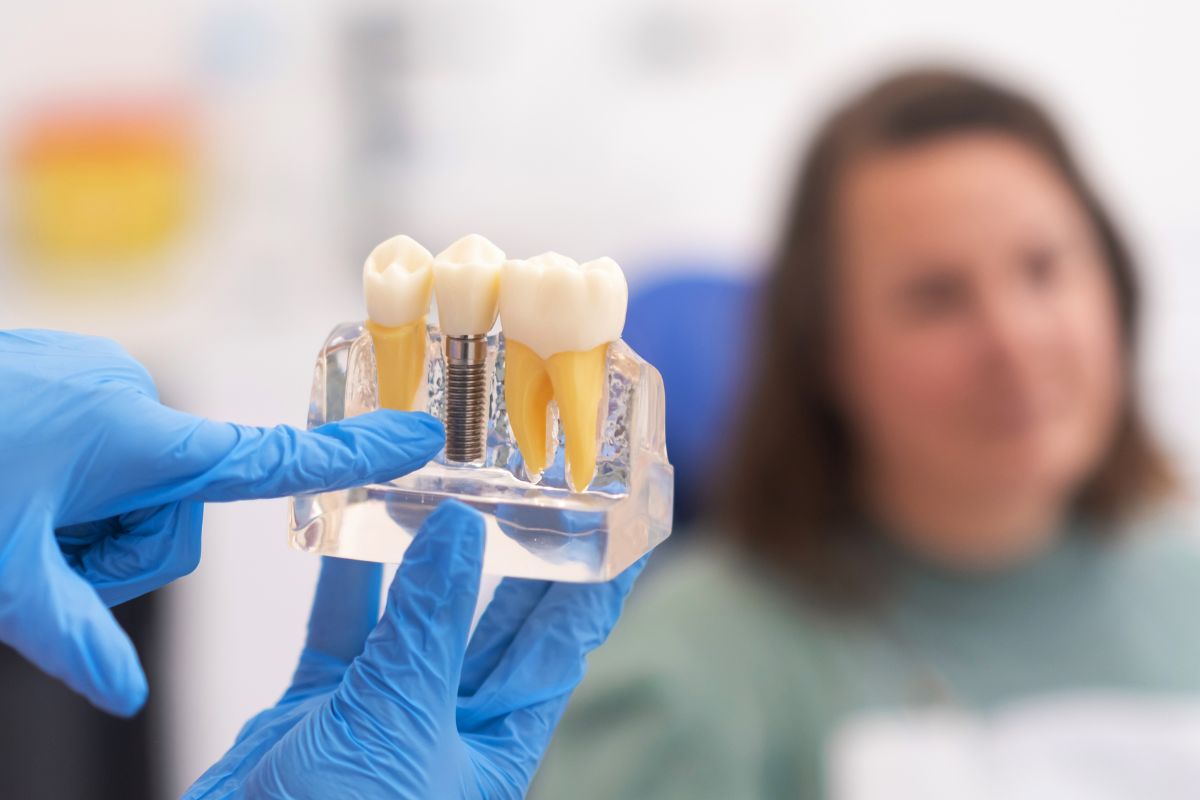
Healing period: 3-6 months for osseointegration (bone fuses to implant)
Visit 2: Abutment placement (connector piece)
Healing period: 2-4 weeks for gums to heal
Visit 3: Final crown placement
Total time: 4-7 months
Same-day dental implants (also called "immediate load" or "teeth in a day"):
Visit 1: Extraction + implant placement + temporary crown (or fixed bridge) all in one appointment
Healing period: Same 3-6 months for osseointegration
Visit 2: Replace temporary crown with permanent crown
Total time: Same healing period, but you leave with a tooth (temporary) on day one
The critical difference: In both procedures, the implant still needs 3-6 months to fuse with bone. Same-day doesn't skip healing – it just gives you a temporary tooth during that healing period. Anyone who promises a permanent tooth in one day is misleading you.
| Feature | Traditional | Same-Day |
|---|---|---|
| Leave with a tooth on day one? | No (healing cap only) | Yes (temporary crown) |
| Total treatment time | 4-7 months | 4-7 months (same healing) |
| Best for | Single tooth, good bone density | Front teeth, multiple teeth with splinting |
| Cost difference | Baseline | $500-$2,000 more for temporary crown |
Part 2: The "Cheap Dental Implants Near Me" Trap
Search for cheap dental implants near me and you'll find prices ranging from $1,500 to $6,000 per implant. That's not a normal range – that's a red flag. Here's what's actually happening.
How legitimate discounts work:
Dental schools: 30-50% off retail (students work under supervision)
Corporate chains (Aspen, ClearChoice): Lower prices by standardizing components
Groupon or coupon deals: Often exclude the crown (only cover the implant itself)
How scams work:
"Implant" is actually a mini implant (smaller diameter, less stable, higher failure rate)
No CT scan included (you'll pay $300-$800 extra)
Temporary crown only (permanent crown is additional $1,000-$2,000)
Foreign-trained dentist not licensed in your state
The real cost breakdown of a legitimate dental implant:
| Component | Typical Cost | What "Cheap" Ads Leave Out |
|---|---|---|
| CT scan | $300-$800 | Often excluded |
| Implant placement (surgery) | $1,500-$3,000 | Included, but surgeon may be inexperienced |
| Implant component (titanium post) | $500-$1,000 | Sometimes excluded |
| Abutment | $300-$800 | Often excluded |
| Crown | $1,000-$2,500 | Frequently excluded |
| Total legitimate cost | $3,500-$6,500 | "Cheap" ads quote $1,500-$2,500 for just the implant |
Before you book a "cheap" appointment: Ask for a line-item quote. If they won't provide it, walk away.
Part 3: Dental Implants for Seniors – Special Considerations
If you're searching for dental implants for seniors near me, you have unique challenges that younger patients don't face. Here's what to know.
Bone density: Jawbone naturally shrinks with age. Without teeth, it shrinks faster. Many seniors need bone grafting before implants. Cost: $400-$2,000 per site. Timeline: Adds 3-6 months.
Medications: Blood thinners (warfarin, Eliquis, Xarelto) increase bleeding risk. Your dentist will coordinate with your prescribing doctor. You may need to pause medication temporarily.
Medical conditions: Uncontrolled diabetes slows healing and increases implant failure risk. Your A1C should be below 7% before surgery. Osteoporosis medications (bisphosphonates like Fosamax) can increase jaw necrosis risk – extremely rare but serious.
Insurance: Traditional Medicare does NOT cover dental implants. Medicare Advantage plans sometimes offer limited dental benefits. Medicaid coverage varies by state (minimal in most). For seniors on fixed incomes, consider dental schools or financing (CareCredit, LendingClub).
| Senior Consideration | Impact | Solution |
|---|---|---|
| Low bone density | May need bone graft ($400-$2,000) | CBCT scan to measure bone volume |
| Blood thinners | Increased bleeding | Coordinate with prescribing doctor |
| Diabetes | Slower healing, higher failure risk | Get A1C below 7% before surgery |
| Fixed income | Affordability challenge | Dental schools, payment plans |
Part 4: American Dental Association Dental Implants – What the Seal Really Means
You've seen the "ADA Accepted" logo on toothpaste. But American Dental Association dental implants? The ADA doesn't certify implants the way it certifies toothpaste. Here's what to look for instead.
What the ADA actually does:
Sets standards for implant materials (titanium alloy composition)
Provides continuing education for dentists
Publishes clinical guidelines (not certifications)
What you should look for instead:
AAID (American Academy of Implant Dentistry) credential – Dentist has completed 300+ hours of implant training
ABOI (American Board of Oral Implantology) diplomate – Highest level of implant expertise
Periodontist or oral surgeon – Specialists who place implants daily
Red flag: A general dentist who took a weekend course and calls themselves an "implant specialist." Ask: "How many implants have you placed?" A qualified provider has placed hundreds (not dozens).
Part 5: National Dental Implants – Corporate Chains vs. Private Practices
When you search for national dental implants, you'll see large corporate chains (Aspen, ClearChoice, Affordable Dentures). Here's how they compare to private practices.
Corporate chains (Aspen, ClearChoice, Affordable Dentures):
Pros: Standardized pricing, one-stop shop (extraction to crown), financing options
Cons: High-pressure sales, rotating dentists (you may not see the same provider), upselling unnecessary procedures
Best for: Simple cases, tight budget, willing to accept standardized treatment
Private practice implant specialists:
Pros: One dentist manages entire process, personalized care, better for complex cases
Cons: More expensive, may need to coordinate with separate specialists (periodontist + general dentist)
Best for: Complex cases (multiple implants, bone grafts, sinus lifts), patients who value relationship continuity
Dental schools:
Pros: Lowest cost (30-50% less), supervised by experienced faculty, academic rigor
Cons: Longer appointments (students work slower), limited appointment availability
Best for: Patients with flexible schedules, willing to trade time for savings
| Provider Type | Cost | Continuity | Best For |
|---|---|---|---|
| Corporate chain | $$ | Low (rotating dentists) | Simple cases, budget focus |
| Private specialist | $$$ | High (same provider) | Complex cases, relationship focus |
| Dental school | $ | Medium (different students) | Flexible schedule, maximum savings |
Part 6: The 5 Questions Your Dentist Hopes You Don't Ask
Before you commit to any dental implants near me, ask these questions. The answers separate qualified providers from salespeople.
Question 1: "What brand of implants do you use?"
Good answer: "Straumann, Nobel Biocare, or Zimmer" (top-tier brands with long-term data). Bad answer: "Our own private label" or a brand you can't research.
Question 2: "Do you have before-and-after photos of cases similar to mine?"
Good answer: Pulls up photos immediately. Bad answer: "We don't share patient photos" or can't find your specific case type.
Question 3: "What happens if my implant fails?"
Good answer: "We replace it at no charge within X years." Bad answer: "That rarely happens" without discussing warranty.
Question 4: "Do you use a CBCT scanner on-site?"
Good answer: "Yes, we have one in-office." Bad answer: "We refer out" (adds time and coordination hassle).
Question 5: "What's the total all-in cost including the crown?"
Good answer: Gives you a written quote with all components. Bad answer: Quotes only the implant, then adds fees later.
Part 7: How to Find Legitimate Affordable Dental Implants
"Cheap" is risky. "Affordable" is possible. Here's how to lower costs without lowering quality.
Strategy 1: Dental schools. Major universities have implant programs. Examples: NYU College of Dentistry, UCLA School of Dentistry, University of Michigan. Cost: 30-50% less. Wait time: 3-6 months for new patient appointment.
Strategy 2: Dental tourism (Mexico, Costa Rica, Colombia). Implants cost $800-$1,500 each (compared to $3,500-$6,500 in US). Factor in travel ($500-$1,000) and lodging ($500-$1,500). Best for: Multiple implants (savings offset travel costs). Risks: Follow-up care is difficult if complications arise after you return home.
Strategy 3: Nonprofit and sliding scale clinics. Search "FQHC dental implants" (Federally Qualified Health Centers). Some offer reduced-cost implants based on income. Wait lists are long (6-12 months).
Strategy 4: Negotiate payment plans. Many private practices offer in-house financing (0% interest for 12-24 months) or work with CareCredit (medical credit card). Ask: "Do you offer any discounts for paying in full?"
| Cost Reduction Strategy | Savings | Trade-offs |
|---|---|---|
| Dental school | 30-50% | Longer appointments, student providers |
| Dental tourism | 50-70% | Travel costs, limited follow-up |
| Nonprofit clinic | 40-60% | Long wait lists (6-12 months) |
| In-house financing | 0% interest | Requires good credit |
Part 8: Recovery Timeline – What to Expect Week by Week
Whether you choose traditional or same-day, recovery is similar. Here's the real timeline (not the optimistic version).
Days 1-3: Swelling peaks. Ice packs (20 min on, 20 off). Soft foods only (yogurt, applesauce, smoothies). No brushing near the implant site. Pain managed with over-the-counter ibuprofen or prescribed medication.
Days 4-7: Swelling decreases. Return to work (avoid strenuous activity). Start gentle salt water rinses. Still soft foods, but can add scrambled eggs, oatmeal, mashed potatoes.
Weeks 2-4: Stitches dissolve or are removed. Normal brushing (gentle around implant). Resume most normal activities. Temporary crown (if same-day) feels normal but avoid biting hard foods on it.
Months 1-3: Implant fusing with bone (osseointegration). No sensation or pain. You'll forget it's there. Keep follow-up appointments for healing checks.
Month 4-6 (traditional) or same-day final crown: Impressions for permanent crown. Crown placed 2-3 weeks later. You're done.
The most common recovery mistake: Eating on the implant side too soon. Even with a temporary crown, the implant isn't fully fused until month 3-4. Chewing on it prematurely can cause failure.
Part 9: Frequently Asked Questions About Dental Implants
Do dental implants hurt?
The procedure is done under local anesthesia – you won't feel pain. Afterward, most patients compare it to a tooth extraction: sore for 2-3 days, manageable with over-the-counter pain relievers.
How long do dental implants last?
The implant itself (titanium post) lasts a lifetime if properly cared for. The crown on top lasts 15-25 years before needing replacement.
Can I get implants if I smoke?
Yes, but smoking doubles or triples the failure rate. Nicotine constricts blood vessels, reducing healing blood flow. If you smoke, expect longer healing and higher risk. Some dentists refuse to place implants in heavy smokers.
Are dental implants covered by insurance?
Rarely. Most dental insurance has a $1,000-$2,000 annual maximum and excludes implants. Medical insurance may cover implants if tooth loss was due to accident or congenital condition. Always verify before treatment.
What's the difference between a mini implant and a standard implant?
Mini implants are narrower (less than 3mm diameter). They're cheaper ($500-$1,500) but less stable and have higher failure rates. Standard implants (3.5-5mm) are the gold standard. Avoid mini implants for back teeth – they can't handle chewing forces.
Part 10: Your Action Plan – Finding the Right Implant Dentist
Week 1 – Research:
Search dental implants near me on Google Maps
Read reviews on Google, Yelp, and Healthgrades (look for patterns, not single bad reviews)
Check credentials (AAID, ABOI, specialty boards)
Week 2 – Consultations:
Schedule 2-3 consultations (most are free)
Bring the 5 questions from Part 6
Ask for line-item written quotes (not verbal estimates)
Week 3 – Compare:
Compare total costs (including CT scan, abutment, crown, follow-ups)
Compare warranties (what happens if implant fails?)
Compare timelines (how long from consult to final crown?)
Week 4 – Decide:
Choose the provider who answered questions clearly and made you feel comfortable
Don't choose based on price alone – a failed implant costs double to fix
Schedule your procedure

