
Affordable Dental Implants in the U.S.: What to Compare Before You Book
Dental implants are often discussed as a premium solution for missing teeth, but the U.S. market now includes a wider range of clinics, payment models, materials, and treatment approaches than many patients expect. A search for affordable dental implants or dental implant clinic near me may show everything from large dental service organizations to private oral surgery offices, prosthodontists, periodontists, and full-arch implant centers. The useful question is not simply which provider has the lowest advertised price. It is whether the clinic can explain the full treatment plan, the technology being used, the materials selected, the follow-up schedule, and the realistic total cost before treatment begins.
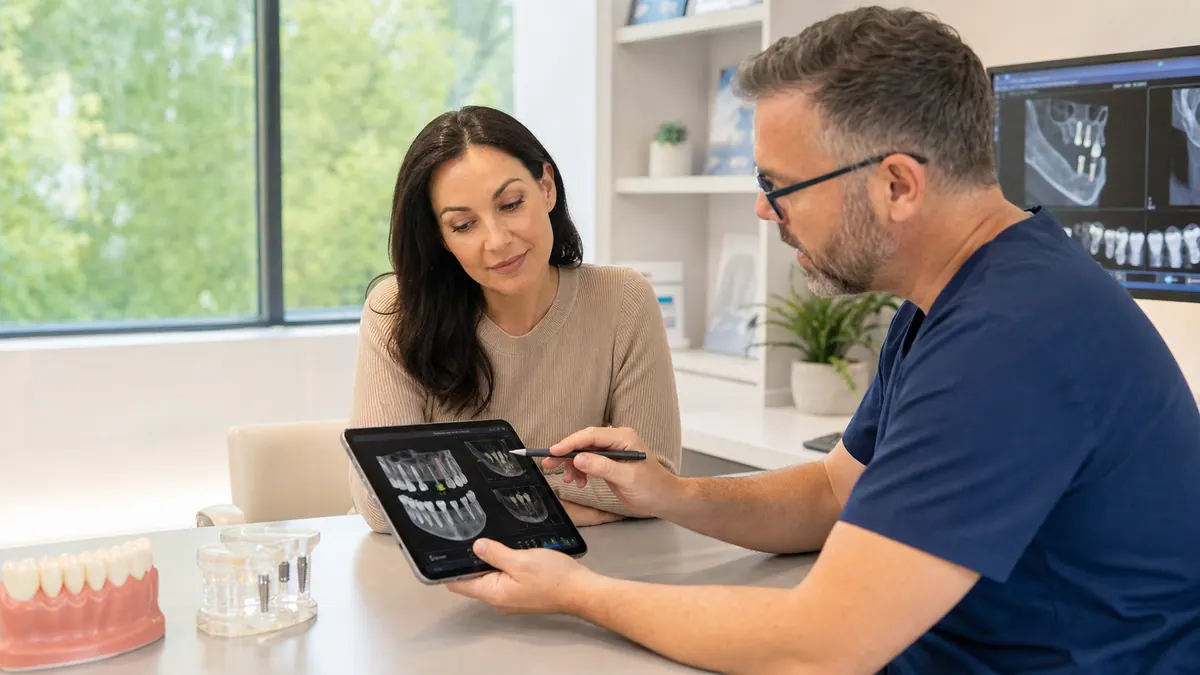
Modern implant care has moved toward digital diagnosis, guided surgery, customized prosthetics, and more patient-focused comfort options. These advances can make treatment planning more precise and may reduce unnecessary appointments, but they do not make every case simple or identical. Bone density, gum health, medical history, smoking status, medication use, and the number of teeth being replaced can all affect timing and cost. This guide explains the main features to compare when evaluating dental implant dentists in the United States, with a focus on practical value rather than exaggerated promises.
The Digital Shift in Dental Implant Planning
From Traditional Impressions to 3D Scanning
For many years, restorative dentistry relied heavily on physical impressions. Patients would bite into a tray filled with impression material so the dental team could create a model of the mouth. That method is still used in some settings, but many implant clinics now use intraoral scanners. These handheld devices capture detailed digital images of the teeth, gums, and bite, then generate a three-dimensional model that can be used for treatment planning and prosthetic design.
For patients, digital scanning can be more comfortable than traditional impression trays, especially for people with a sensitive gag reflex or anxiety about dental procedures. For providers, the value is in the level of detail and the ability to share data quickly with dental labs, implant manufacturers, or surgical planning software. When a person searches for teeth fixing near me, it is worth checking whether the office uses digital impressions, cone beam CT imaging, or guided implant planning. These tools do not replace clinical judgment, but they can help the dentist evaluate bone volume, neighboring teeth, bite alignment, and potential risk areas before surgery.
A digital workflow may also reduce delays. If scans can be sent to a lab immediately, temporary teeth, surgical guides, or final restorations may be planned with fewer manual steps. This can be useful for single-tooth implants as well as more complex cases such as several missing teeth or full-arch treatment. Patients should still ask how many visits are expected, whether additional imaging is included in the quoted price, and whether the same clinic handles both surgery and restoration.
3D Planning and Customized Surgical Guides
One of the biggest changes in implant dentistry is the use of digital planning software. A dentist or specialist can combine a CT scan with digital impressions to plan the implant position before the procedure. The goal is to choose an angle, depth, and location that support the final crown, bridge, or denture while avoiding nerves, sinus areas, and other sensitive structures.
Some clinics use a 3D-printed surgical guide. This guide fits over the teeth or gums and helps direct the implant placement according to the plan. For the right patient, guided surgery may support a more efficient procedure and a more predictable restorative outcome. However, it is not automatically necessary for every case. A simple single implant in an area with strong bone may be planned differently from a full-mouth reconstruction. Patients should ask whether guided placement is recommended for their specific anatomy and whether the guide fee is included in the estimate.
Digital technology can also support customized temporary teeth and final prosthetics. In the past, some treatment plans required more manual adjustment because the restoration had to be adapted after the implant was placed. Today, many clinics plan the final tooth position first and then place the implant to support that outcome. This approach can be especially important for visible front teeth, bite stability, and full dental implants where the prosthetic must feel secure during chewing and speaking.
Materials: Titanium, Zirconia, and Biocompatibility
Why Implant Material Matters
Most dental implants in the U.S. are made from titanium or titanium alloy. Titanium has a long clinical history because it is strong, lightweight, and generally compatible with bone. The biological process that allows bone to attach around the implant is called osseointegration. A successful implant plan depends on healthy integration, good oral hygiene, appropriate bite forces, and regular professional follow-up.
Some patients ask about metal-free options, especially if they have concerns about metal sensitivity or want a tooth-colored material near the gumline. Zirconia implants are one alternative that may be offered by some implant dental providers. Zirconia is a ceramic material with a different appearance and design profile than titanium. It may be appropriate in selected cases, but it is not the default answer for everyone. Availability, long-term data, implant design, bone conditions, and the dentist’s experience with the material should all be discussed during consultation.
Surface design also matters. Implant manufacturers use different textures and coatings to encourage bone contact. Patients do not need to know every technical detail, but they should ask what implant system is being used, whether it is widely supported in the U.S., and whether replacement parts are likely to be available later. A very low price can be less appealing if the components are hard to identify, poorly documented, or difficult for another dentist to service in the future.
Matching the Treatment to the Patient
A responsible dental implant dentist should evaluate more than the missing tooth. Medical conditions, gum disease, diabetes management, tobacco use, medications such as bisphosphonates, and past radiation therapy can influence implant planning. This does not mean a person is automatically ineligible, but it does mean the treatment plan should be individualized.
The clinic should also explain whether bone grafting, gum treatment, tooth extraction, sinus lift, or periodontal care is needed before implant placement. These services may significantly affect cost and timing. When comparing affordable dental implants, patients should compare complete treatment plans rather than only the implant post fee. A quote that excludes the abutment, crown, imaging, extraction, sedation, or follow-up visits may look attractive at first but may not represent the full price.
Cost, Financing, and Long-Term Value
What Influences Dental Implant Cost in the U.S.
Dental implant pricing in the United States varies widely by region, provider type, case complexity, material, and restoration design. A single implant with crown is different from implant-supported dentures, a three-unit bridge, or a full-arch solution. A clinic in a high-cost metro area may charge differently from a suburban or regional provider. Specialist involvement, sedation, imaging, lab work, temporary teeth, and bone grafting can also change the estimate.
Because of this variation, it is better to ask for a written treatment plan than to rely on a broad advertised range. The written estimate should clarify what is included: consultation, CT scan, extraction, grafting, implant post, abutment, crown or denture, temporary restoration, final restoration, follow-up visits, and maintenance. Patients should also ask what happens if the plan changes after imaging or during surgery. Transparent clinics usually explain possible add-on costs before treatment begins.
Dental insurance may cover part of the diagnostic, extraction, crown, or restoration cost, but many plans limit implant coverage. Some clinics offer third-party financing, in-house payment plans, or staged treatment options. These tools can make payment more manageable, but patients should review interest rates, deferred-interest terms, late fees, and total repayment cost. A lower monthly payment is not always the lowest overall cost.
Affordability Is More Than the Lowest Price
The best value often comes from a plan that balances cost, durability, serviceability, and patient needs. Traditional removable dentures may cost less upfront, but they may require relines, adhesives, repairs, or replacement over time. Bridges can be appropriate for some patients, but they may involve reshaping neighboring teeth. Implant-supported restorations can help preserve function and stability, but they require surgery, maintenance, and enough healthy bone or planned grafting.
Patients comparing dentist implants should ask how the clinic handles complications, warranty language, emergency visits, broken prosthetic teeth, hygiene appointments, and long-term maintenance. No ethical provider should guarantee lifetime results for every patient. However, a clear maintenance plan and accessible follow-up care are important parts of long-term value. For full-arch cases, ask whether the final teeth are acrylic, zirconia, or another material, and how repair or replacement is handled if a tooth chips or wears down.
Full Dental Implants and Full-Arch Options
Replacing Many Teeth
People searching for full dental implants are often looking for a stable alternative to removable dentures. In many clinics, this may refer to full-arch implant treatment, sometimes described as All-on-4, All-on-6, implant-supported dentures, or fixed hybrid dentures. These treatments use several implants to support a full row of replacement teeth. The exact number of implants and the design of the prosthetic depend on bone structure, bite forces, budget, and the provider’s treatment philosophy.
Full-arch treatment can improve chewing stability and reduce denture movement for suitable candidates. It can also provide a more fixed-feeling solution than traditional dentures. However, it is a significant dental and financial decision. Some patients need extractions, bone reduction, temporary teeth, healing time, and a final prosthesis after several months. Others may be offered immediate-load teeth on the same day as implant placement, but this does not mean the case is finished in one visit. Follow-up care and final restoration steps still matter.
Before choosing a full-arch provider, patients should ask who performs the surgery, who designs the teeth, where the lab work is completed, what material is used for temporary and final teeth, and how many appointments are typical. It is also useful to ask to see examples of cases that are similar in age, bite condition, and tooth loss pattern. Photos can help, but they should not replace a personalized exam.
Single Implant, Bridge, or Implant Denture?
Not every missing tooth requires the same solution. A single missing tooth may be treated with one implant and crown if bone and gum conditions are favorable. Several missing teeth in a row may be treated with an implant-supported bridge. A patient missing most or all teeth may consider removable implant dentures or fixed full-arch teeth. Each option has different cost, hygiene, comfort, and maintenance requirements.
A good consultation should explain alternatives in plain language. For example, a removable implant denture may be easier to clean and less costly than a fixed full-arch prosthesis, but it may not feel as natural to every patient. A fixed bridge may feel stable, but it may require special cleaning tools. A single implant may preserve neighboring teeth, but it takes time for healing and restoration. The right comparison is based on clinical needs and patient priorities, not just the most advanced-sounding option.
Comfort, Sedation, and the Clinic Experience
Managing Dental Anxiety
Many people delay implant consultations because they worry about pain, surgery, or past dental experiences. Modern implant clinics often address this with a more comfort-focused environment, careful explanation, local anesthesia, and sedation options. Depending on the provider and state regulations, sedation may include nitrous oxide, oral sedatives, IV sedation, or referral to a specialist setting.
Patients should ask what level of sedation is available, who monitors it, what training the provider has, and whether a driver is required after the appointment. Sedation can add cost, and not every patient is a candidate for every type. Medical history, medications, age, and airway concerns may affect what is appropriate. A clinic that takes anxiety seriously should be willing to discuss options without pressuring the patient into unnecessary services.
What a Consultation Should Include
A useful implant consultation should include a health history review, oral exam, imaging recommendations, discussion of tooth replacement options, cost estimate, timeline, and explanation of risks. Patients should be given time to ask questions. If the appointment feels rushed or the price changes dramatically without explanation, it may be worth getting a second opinion.
For people searching dental implant clinic near me, location matters, but follow-up access matters too. Implant care is not only the surgical day. Healing checks, restoration fittings, bite adjustments, cleaning instructions, and long-term maintenance are part of the process. A nearby clinic can be convenient, but experience, transparency, and continuity of care should also be weighed.
Checklist: Questions to Ask Before Choosing a Dental Implant Clinic
- Is the provider a general dentist, oral surgeon, periodontist, prosthodontist, or a team-based clinic?
- How many implant cases similar to mine does the clinic handle each year?
- Will I receive a written treatment plan with all expected fees listed?
- Are CT scans, digital impressions, surgical guides, temporary teeth, and follow-up visits included?
- What implant brand or system will be used, and is it widely supported?
- Do I need bone grafting, gum treatment, extractions, or sinus procedures before implants?
- What restoration material is recommended, and why?
- What are the alternatives to implants for my case?
- What financing options are available, and what is the total repayment cost?
- What maintenance schedule is recommended after treatment?
Q&A
What are dental implants?
Dental implants are artificial tooth-root structures placed in the jawbone to support a crown, bridge, or denture. They are commonly made from titanium, though some clinics offer ceramic options such as zirconia for selected patients. After placement, the implant needs time to integrate with bone before it can support the final restoration in many cases.
How do I find a reputable dental implant clinic near me?
Start by comparing credentials, experience, reviews, before-and-after examples, technology used, and the clarity of the written treatment plan. You can also ask your general dentist for referrals or check professional organizations for dentists and specialists in your area. A reputable clinic should explain risks, alternatives, fees, and follow-up care without relying on pressure-based sales tactics.
Are affordable dental implants lower quality?
Not always. Lower cost may come from efficient digital workflows, in-house labs, regional pricing, financing, or promotional consultation offers. However, patients should confirm what is included. A low advertised price may exclude the crown, abutment, imaging, extraction, sedation, or grafting. The most useful comparison is the complete cost for the full treatment plan.
Can full dental implants replace all teeth?
Full-arch implant treatment can replace a full upper or lower set of teeth for suitable candidates. These cases typically use multiple implants to support a fixed or removable prosthesis. The plan depends on bone health, medical history, bite forces, budget, and whether the patient wants a removable or fixed design.
What should I expect during the implant process?
The process often begins with consultation, imaging, and treatment planning. Some patients need extractions or grafting before implant placement. After surgery, healing time allows the implant to integrate with bone. The final step is attaching the abutment and crown, bridge, or denture. Timelines vary, so patients should ask for a case-specific schedule.
Is dental implant treatment right for everyone?
No single dental treatment is right for every patient. Gum disease, uncontrolled medical conditions, certain medications, smoking, insufficient bone, or bite problems may affect the plan. A licensed dental professional can evaluate whether implants, bridges, dentures, or another option is appropriate for a specific case.

